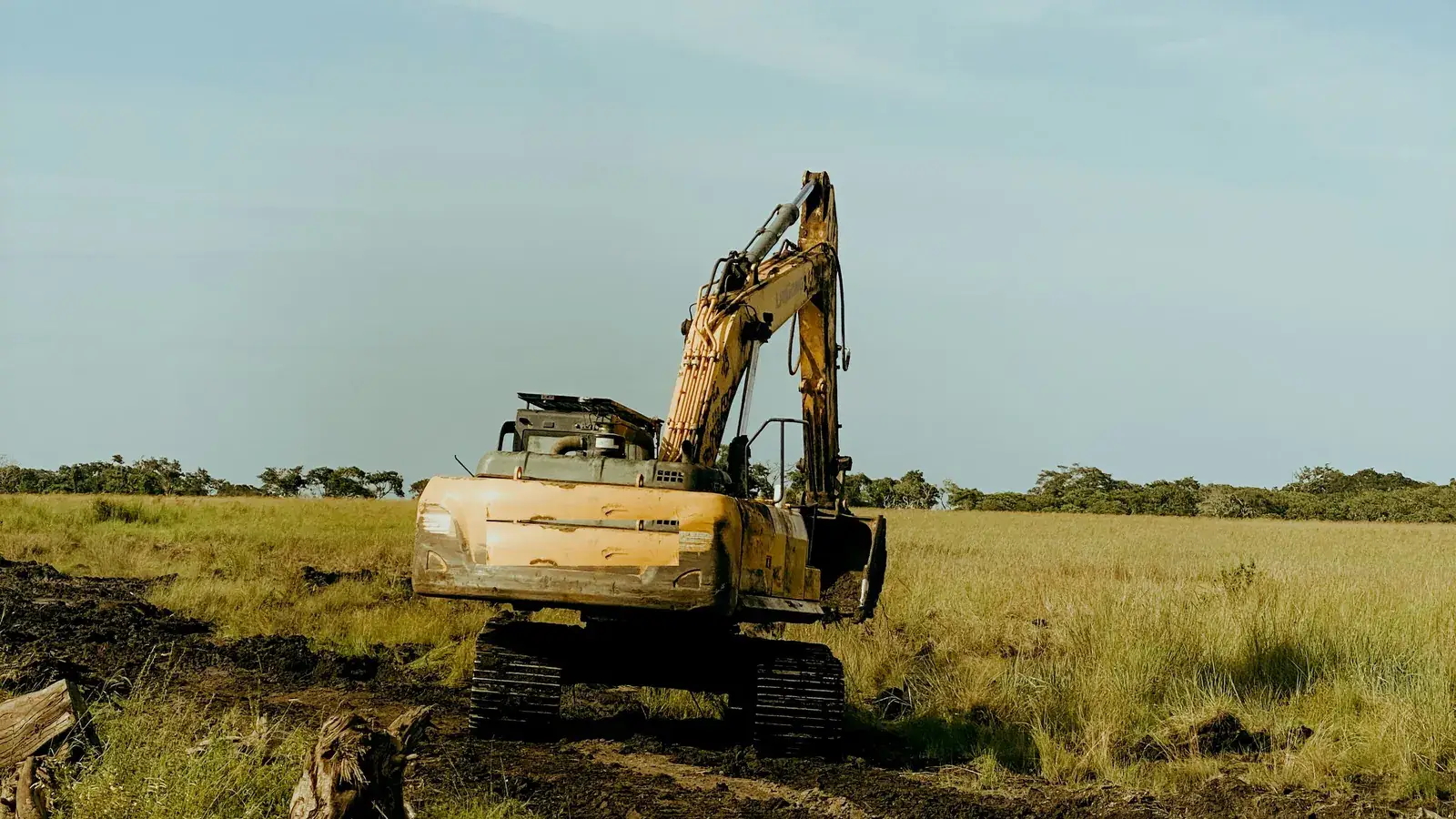
The right answer to “what size excavator for land clearing?” is not one fixed machine class. A contractor must match the excavator to the trees, roots, reach, access, and soil. In a Southeast Texas winter, soft ground may make a lighter machine the better choice, even when a larger one has more power.
That choice affects how cleanly the property can be cleared and what condition it is left in. Our complete guide to land clearing in Texas explains the full process. This guide looks at one part of that process: selecting an excavator when rain, mud, and limited access can change the plan.
What Excavator Size Class Fits the Clearing Job?
Excavator class should follow the work, not acreage alone. Tracts of the same size can have very different trees, roots, access points, and wet areas.
Compact and small excavators
Compact or small excavators can fit through tighter access points and work near fences, homes, barns, or trees that will stay. Their lower machine weight may also help on soft ground. They still need enough reach, lift capacity, and attachment capacity for the planned work.
Mid-size excavators
A mid-size excavator may balance digging force, reach, stability, and access on land with mixed vegetation. “Mid-size” is only a broad label. Attachment weight, boom reach, track setup, slope, and soil still change what the machine can do safely.
Larger excavators
Larger excavators bring more reach, lift capacity, and force for big trees, dense roots, and heavy debris. The tradeoff is weight and space. They need a sound travel path, room to swing, safe setup areas, and delivery access. On wet ground, added weight can raise the risk of rutting or sinking.
| Broad machine class | May fit when | Winter issue to check |
|---|---|---|
| Compact or small | Access is tight and material is limited | Enough reach and lifting ability for roots |
| Mid-size | Vegetation and access needs are mixed | Track path, bearing ground, and attachment choice |
| Larger | Trees, root masses, or lifts are heavy | Delivery access, swing room, rutting, and soft areas |
Did You Know? A tracked machine can spread its weight across a larger contact area, but tracks do not make soft ground risk-free. Total weight, track width, travel path, turning, and soil moisture still matter.
How Does a Southeast Texas Winter Change the Choice?
In Southeast Texas, winter planning usually means rain-softened soil, mud, and shorter drying windows, not snow cover or long freezes. A machine that works on firm summer soil may leave deeper ruts after winter rain.
Wet soil changes how weight matters
Ground pressure describes how a machine’s weight is spread over the area touching the soil. Wider tracks and a larger footprint can help distribute weight. Yet machine weight still matters, and sharp turns can shear the wet surface.
The USDA Natural Resources Conservation Service advises avoiding heavy-equipment use on wet soil to reduce compaction. Do not choose on power alone; look at what the ground can carry and how many passes the work needs. See the NRCS guide to soil risks and compaction.
Pro Tip: Identify one firm entrance and a planned travel lane before work starts. Keeping machine movement to a sensible route may protect more of the property than choosing a smaller machine with no travel plan.
Access can set the upper limit
The largest useful excavator may still be the wrong excavator if it cannot reach the work area. Gate width, overhead lines, soft shoulders, culverts, bridges, septic areas, fences, and tight turns all shape delivery and movement.
Tail swing, boom movement, standing trees, and nearby structures can reduce usable space. A site walk should trace the full route from the road to the clearing area.
Rain can change conditions after work begins
Rain can soften a travel lane, fill a hole, or weaken an excavation edge. OSHA’s trenching and excavation safety fact sheet calls for inspections after rain or water intrusion when trench work is involved. Stump removal is not always trenching, but changed ground still needs a fresh look.
Did You Know? Water can hide the edge and depth of a stump hole. The area may need to be marked, filled, or kept out of the travel route before equipment moves nearby.
Which Site Factors Matter More Than Acreage?
Acreage defines scope, but the hardest task and the site limits drive force, reach, and lift needs.
Tree and root size
Trunk diameter is only part of the picture. Species, root spread, soil grip, nearby trees, and the desired finish all affect removal. 3H’s traditional land-clearing service removes trees, brush, and root masses rather than grinding growth into mulch.
Reach and lift needs
An excavator may need to control a tree, pull a root mass, lift debris, or place material. Its limits change with reach, lift height, attachment, and position. The attachment must suit the task, and the operator needs stable setup room.
What must remain untouched
Mark fences, utility areas, septic parts, drainage paths, valued trees, buildings, and planned access. These limits can favor a smaller working envelope, another attachment, or staged work.
Texas811 states that the person digging must request utility marking at least two business days before excavation, excluding weekends and holidays. Review Texas811 guidance before digging and confirm the locate ticket before ground disturbance starts. Private lines may need separate locating.
Pro Tip: Mark the future use of each cleared area during the site walk. A build pad, pond route, pasture edge, and fence line may need different levels of root removal and ground protection.
How Should a Contractor Choose the Machine?
The best selection comes from a site assessment, not a universal chart. At 3H Construction LLC, every land-clearing job starts with the property size, growth density, existing material, and the owner’s end goal. For winter work, that review should also cover recent rain, soft spots, slopes, drainage, and delivery access.
Start with the hardest safe task
Largest roots, heaviest lifts, needed reach, and tight working areas set the lower boundary for machine ability. Access, soil support, and room set the upper boundary. A larger unit may handle one tree faster but disturb a soft approach. A smaller unit may need too many passes. The right class balances both sides.
Plan the whole equipment mix
An excavator may not perform every step. A dozer, skid steer, or truck may handle pushing, cleanup, grading, or debris movement. Each part of the job needs a sound method.
If construction will follow, coordinate clearing with site work and site preparation. That helps connect tree and root removal with access, drainage, rough grading, and the planned build area.
Prepare for the site visit
Before the contractor arrives, mark property limits and clearing areas. Note gates, culverts, septic parts, utility lines, and wet places. Share the land’s planned use and areas where rutting would cause problems.
A walk-through gives a better basis for machine class, attachments, travel paths, and timing.
Get a Site-Based Recommendation for Winter Clearing
The right excavator for winter land clearing in Texas is the one that can handle the trees and roots while fitting the access and current ground. Machine class, tracks, reach, lift needs, attachments, travel paths, and recent rain all belong in the same decision. For more context, return to our Texas land-clearing guide.
3H Construction LLC provides traditional land clearing from Richards across Central and Southeast Texas, including Grimes, Walker, Brazos, Burleson, Montgomery, and Waller counties. Request a property assessment and free estimate so the team can review access, vegetation, ground conditions, and what you plan to build or use next.
Frequently Asked Questions
What size excavator is best for clearing small trees?
A compact, small, or mid-size excavator may fit small-tree clearing, but trunk size alone does not decide the class. Root spread, species, soil moisture, access, attachments, and the area around each tree all affect the safe choice.
Is a bigger excavator always better for land clearing?
No. A larger excavator offers more force, reach, and lifting ability, but it also needs more access and firm working room. On wet winter ground, added weight may increase rutting or make a soft travel path harder to protect.
Can an excavator clear wet land in winter?
Sometimes, but the contractor must inspect the ground and choose a safe travel and setup plan. Work may need a different machine, a limited route, ground protection, staged clearing, or a delay until soft areas can carry equipment.
Do I need utility lines marked before stump removal?
Yes, utility locating must be handled before digging. In Texas, the person doing the excavation must contact 811 at least two business days before work, excluding weekends and holidays; private lines may require a separate locator.