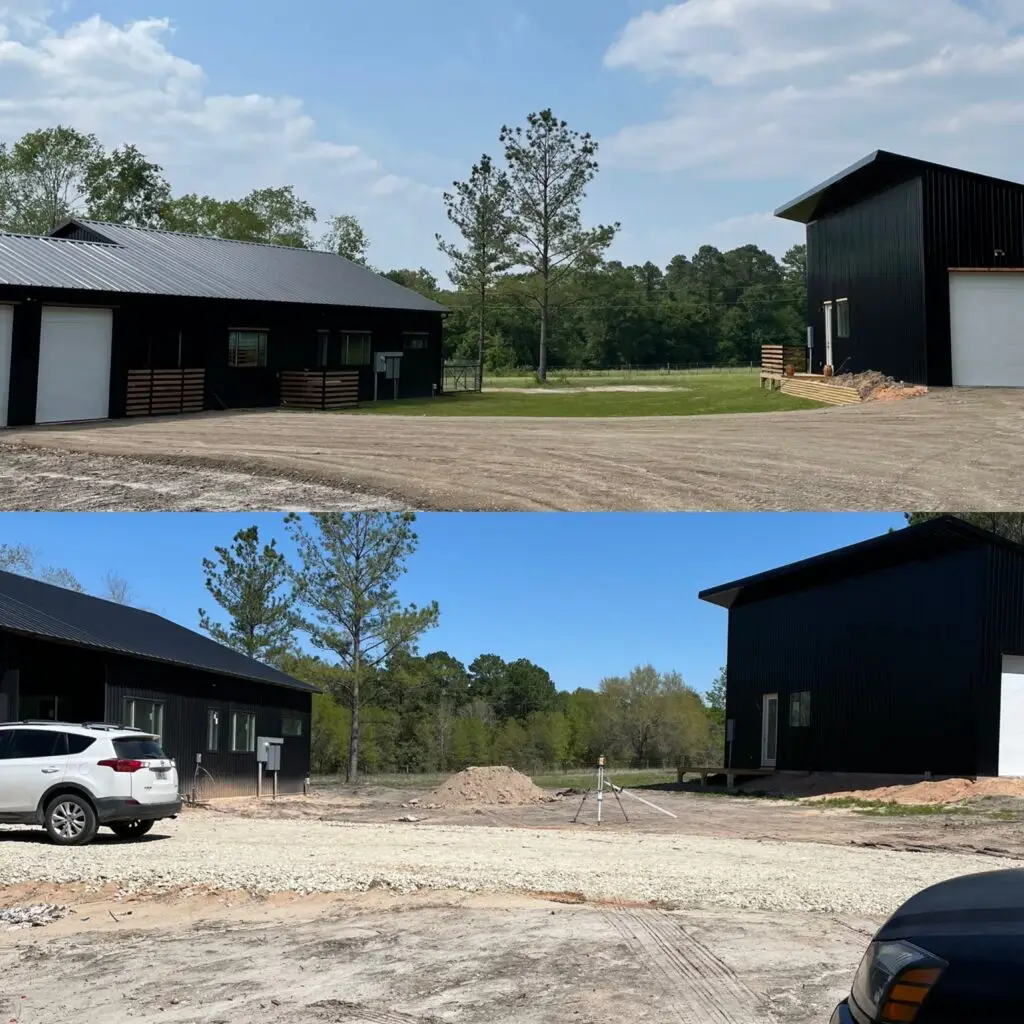
If you’re planning to build a home on raw land in this part of Texas, you need a house pad — a graded, leveled, and compacted foundation area that gives your home a stable place to sit. Getting this right is one of the most important steps in the entire build process, and it’s one of the things 3H Construction does every day.
What a House Pad Is and Why It Matters
A house pad is the prepared area of ground where your home’s slab or foundation will be placed. It involves cutting into high spots, filling low spots, grading to the right elevation, and compacting the soil so it won’t settle unevenly after construction.
In much of Central and Southeast Texas, the soil is clay-heavy and prone to movement with moisture changes. A pad that isn’t properly built can lead to foundation issues, cracked slabs, and structural problems that are expensive to correct after the fact. Getting the pad done right at the start is worth every bit of the effort.
We’ve built house pads for homes of all sizes on raw acreage throughout Grimes County and the surrounding area, and we understand what the local soil and terrain require.
What the Process Looks Like
Every property is a little different, but the general process for a house pad involves:
- Assessing the build site and establishing the target elevation
- Clearing the footprint area if not already done
- Cutting down high spots and moving that material
- Bringing in fill as needed to raise low areas to the correct grade
- Compacting in lifts to ensure the pad is stable and meets engineering requirements
- Final grading and leveling across the pad area
Some builds will require soil testing or engineer-specified compaction standards — we work within those requirements as needed.
Get a Free Estimate
Building on raw land in the Richards, Huntsville, or College Station area? Let’s talk about getting your pad right before construction starts. We offer free estimates.
Call (979) 571-8110 or fill out our contact form.
House Pad FAQs
What size house pad do I need?
That depends on your home’s footprint, plus a setback around the perimeter for access and grading. Your builder or engineer will typically have specs on the required pad dimensions. We can work from those specs or help you figure out what makes sense if you don’t have them yet.
How much fill dirt will I need for my house pad?
It depends entirely on your current grade relative to your target elevation. Properties with significant low spots or drainage concerns may need more fill than flatter sites. We calculate that as part of the estimating process after looking at the land.
Does the pad need to be inspected or approved by anyone?
In many rural areas of Grimes and surrounding counties, a house pad doesn’t require a formal inspection. However, some lenders and builders require compaction testing before they’ll proceed with foundation work. We can discuss this during the estimate, and if testing is required, we build the pad to meet those standards.
How long does it take to build a house pad?
For most single-family home pads, we’re typically talking about one to three days depending on the size, the amount of fill required, and the site conditions. We’ll give you a more accurate timeline when we look at the property.
Can I build a house pad during wet weather?
Heavy rain and saturated soil can delay pad work significantly. Clay soil especially does not compact properly when it’s wet, and attempting to work wet ground often creates more problems than it solves. We’ll factor in weather and current soil conditions when scheduling your project.
Do I need to clear the land before you build the house pad?
Yes — the build footprint needs to be clear of trees, roots, and brush before we can properly grade and compact. We offer land clearing as well, so we can handle both in sequence if you haven’t had that done yet.