
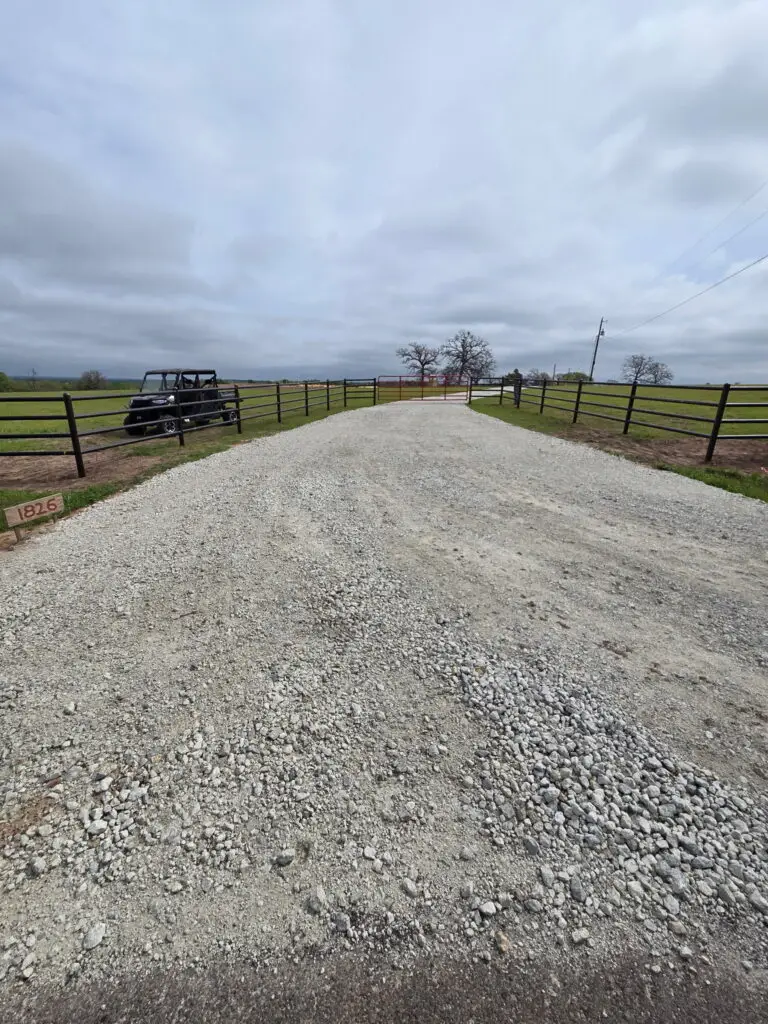
If your property is hard to access, or your existing driveway has turned into a drainage problem, 3H Construction can help. We install and grade gravel driveways and place culverts where proper drainage requires it — keeping your property accessible and protecting it from water damage.
We work on rural and semi-rural properties throughout our service area, from short driveways connecting a home to a county road to longer access roads across larger parcels.
What We Do
Gravel Driveway Installation
A properly installed gravel driveway isn’t just dumped rock — it requires proper base preparation, grading to move water away from the drive surface, and the right material for your soil type and traffic needs. We handle the ground prep, the grading, and the rock placement so you end up with a driveway that stays where it’s supposed to and doesn’t wash out every time it rains.
Culvert Installation
Where a driveway crosses a ditch or where water needs to pass under a road or access point, a culvert is the right solution. We size and place culverts correctly for the water flow they need to handle, and we bed and backfill them properly so they stay in place over time.
Driveway Grading and Repair
If you’ve got an existing gravel driveway that’s developed ruts, drainage issues, or low spots where water pools, we can regrade and refresh it to get it back in working order.
Get a Free Estimate
Need a driveway installed or repaired in the Richards or Grimes County area? We offer free estimates.
Call (979) 571-8110 or submit our contact form.
Gravel Driveways & Culverts FAQs
What type of gravel is best for a driveway in this part of Texas?
That depends on your soil type and how much traffic the driveway will see. In much of Central and Southeast Texas, crushed limestone or caliche base material performs well. We can recommend what makes sense for your specific situation.
How thick should a gravel driveway be?
For most residential driveways, a base depth of four to six inches of compacted material is typical. Heavier use or soft soil conditions may require more. We assess the site and the intended use before recommending a spec.
How long does a gravel driveway last?
With proper installation and reasonable maintenance — periodic regrading and topping off material as needed — a gravel driveway can last for many years. The main factors are how well the drainage was set up and whether the base was properly prepared from the start.
What size culvert do I need?
Culvert sizing depends on the width of the area it’s spanning and the volume of water flow it needs to handle. Undersized culverts back up and wash out. We size culverts based on the drainage situation at your specific crossing.
Can you repair my existing gravel driveway?
Yes. If your driveway has ruts, low spots, or drainage issues, regrading and adding fresh material can often bring it back to good condition. We’ll take a look and tell you what it needs.
Do I need a culvert if my driveway crosses a ditch?
If water regularly flows through that ditch, yes — driving over an open ditch or filling it without a culvert will eventually cause erosion or damage to the driveway and the surrounding area. A culvert placed and sized correctly lets the water pass where it needs to go while giving you a solid surface to drive over.