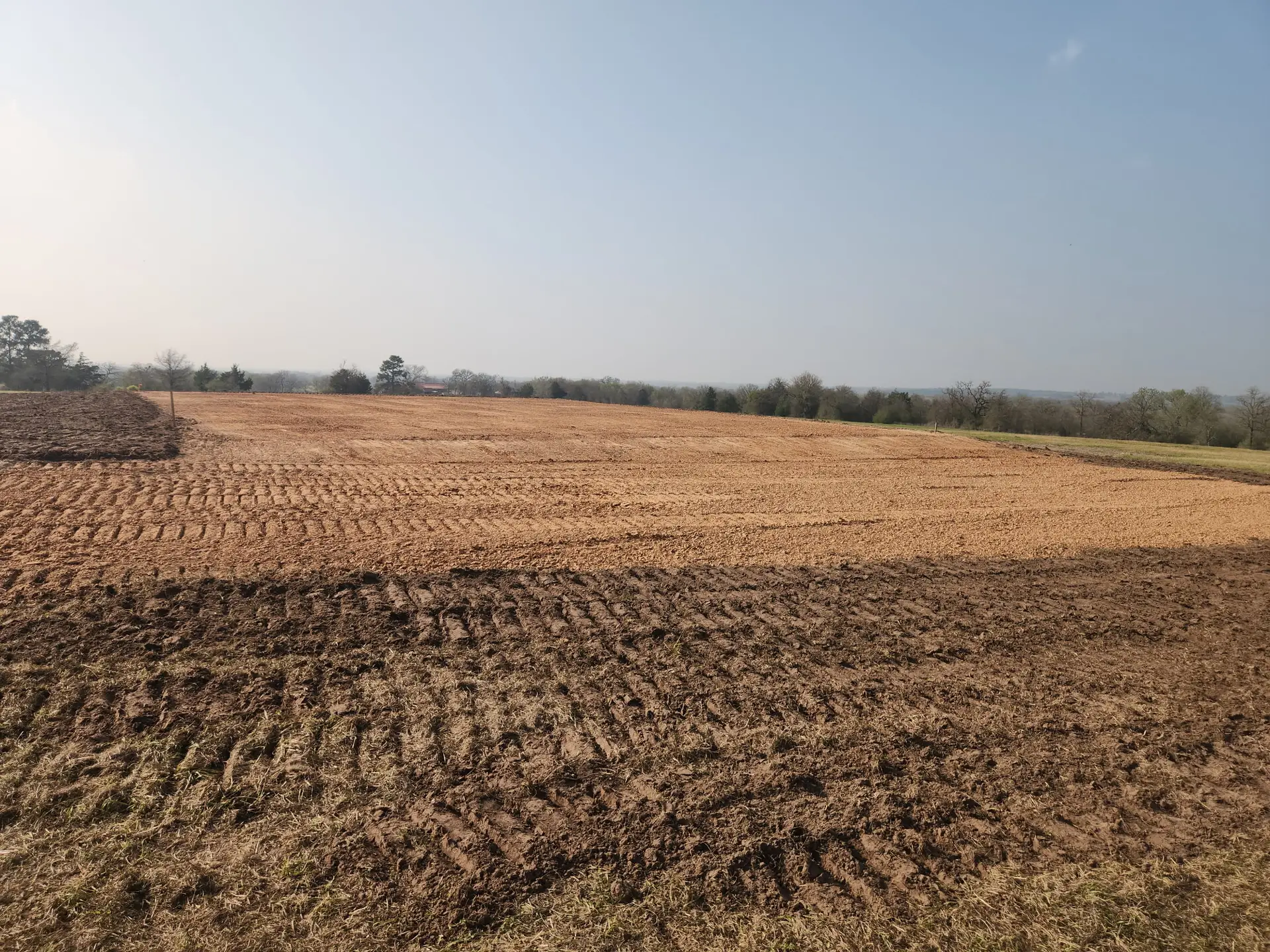
Land clearing in Texas is how every raw land project begins — and getting it right the first time sets up everything that follows. Whether you’re building a home, putting up a fence, digging a pond, or just reclaiming overgrown acreage, this guide covers the clearing methods used in Central Texas, what it typically costs per acre, what the process looks like from start to finish, and the questions every landowner should ask before a machine touches the ground.
The Three Questions Every Texas Landowner Asks Before Clearing
Before any estimate, before any equipment shows up, most landowners in Grimes, Walker, and Brazos County are wrestling with the same three questions: What method is right for my land? How much is this going to cost? And how long will it actually take?
The short answers: the method depends on what’s growing and what you’re building. The cost in Central Texas typically runs $1,500 to $8,000+ per acre, depending on vegetation density and terrain. And a well-run crew with the right equipment can clear a five-acre residential tract in one to two days.
Everything else is detail — and the detail matters.
What “Land Clearing” Actually Means (and What It Doesn’t)
Land clearing is the removal of trees, brush, stumps, and overgrowth from a piece of property to prepare it for a specific use. That’s it. The term gets used loosely, but the goal is simple: take what’s there and make room for what’s coming.
What land clearing is not: it’s not forestry mulching, it’s not selective tree trimming, and it’s not a landscaping service. If a contractor offers “forestry mulching” as their only clearing option, understand what that means — they’re grinding vegetation into mulch and leaving it on-site. That works in some scenarios, but it’s a different process with a different outcome than traditional clearing.
At 3H Construction, we do traditional clearing. Trees, brush, and root masses come out. The land is cleared. What happens to the debris — burn pile, haul-off, or on-site disposal — gets discussed during the estimate based on your county’s rules and your preferences.
Did You Know? Grimes County and surrounding counties operate under burn bans set by the county judge or commissioners court based on drought conditions. Before your clearing crew lights anything, check the current burn ban status through your county or the Texas A&M Forest Service burn ban map at tfsweb.tamu.edu.
Land Clearing Methods Used in Texas
Mechanical Clearing
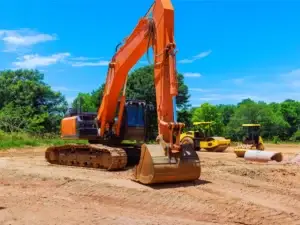
This is the most common method for residential and agricultural land in Central Texas. Excavators, bulldozers, and skid steer loaders push, pull, and uproot trees and brush. For heavily wooded tracts with large hardwoods — post oak, live oak, and water oak are all common in Grimes County — a full-size excavator or a dozer does the heavy work.
Mechanical clearing is efficient, it handles large root masses that mulching equipment can’t, and it leaves you with land that’s actually ready for grading and construction. For our complete breakdown of the specific equipment involved, see our guide to land clearing services.
Brush Cutting and Mulching
For lighter growth — cedar, mesquite, native brush — brush cutters and mulching heads on tracked equipment can knock down and process material quickly. This is cost-effective for pasture reclamation where you don’t have a lot of large trees with significant root systems.
The limitation: mulched material stays on the ground. That’s fine for a pasture you’re reclaiming. It’s not ideal if you’re prepping for grading and site work, because the decomposing organic material beneath your soil creates settling problems down the line.
Combination Approach
On most properties we see in this region, the real answer is a combination of methods. Large trees come out mechanically. The mid-size brush gets cut and processed. Stumps get pulled or ground down based on what’s planned for the cleared area. A good crew reads the land and adapts — there’s no single machine that’s right for every inch of a five-acre tract.
Pro Tip: Before your clearing estimate, walk the property and note where you want to build, where the fence line runs, and where water tends to collect. That information changes how a crew approaches the job — and a good contractor will ask you these questions before they quote.
Land Clearing Costs in Central Texas: What to Actually Expect
Cost Per Acre Ranges
In Grimes County and the surrounding region, realistic land clearing costs typically look like this:
| Vegetation Level | Typical Cost Per Acre |
| Lightly wooded / brush-heavy | $1,500–$2,500 |
| Moderately wooded / mixed hardwoods | $2,500–$4,500 |
| Heavily forested / large trees, dense canopy | $5,000–$8,000+ |
These ranges reflect current 2026 market conditions in Central and Southeast Texas. The difference between light clearing and heavy clearing on the same five-acre tract can be $15,000 or more — which is why a site visit before any quote matters.
What Drives the Price Up or Down
Terrain matters. Flat, accessible land with decent road access costs less to clear than rolling terrain with soft spots, creek crossings, or tight access points.
Root systems matter. A pasture full of cedar and mesquite clears faster than a tract of mature post oaks with root masses several feet across.
Debris disposal matters. If material can be pushed to a burn pile and burned on-site (when conditions and regulations allow), cost stays lower. If everything has to be hauled off, add equipment and dump fees to the estimate.
What you’re building next matters. A clearing job that feeds directly into excavation and grading for a house pad has to be cleaner than a pasture reclamation job. That affects how the crew works and what they leave behind.
For a detailed estimate specific to your property type, reach out to us directly — cost per acre varies too much to quote accurately without a site visit.
Did You Know? In Texas, land taxed under an agricultural valuation — where property taxes are calculated based on the land’s productive value rather than its market value — can trigger significant rollback taxes if that valuation is lost. Converting land from agricultural to non-agricultural use can result in back taxes for up to three to five years. Talk to your county appraisal district or a tax professional before clearing large acreage if your land currently carries an agricultural valuation.
What the Land Clearing Process Looks Like Start to Finish
Step 1: Site Assessment and Estimate
Every job starts with a walkthrough. We look at what’s on the property, ask what you’re doing with it, and identify anything that complicates the job — wet areas, slopes, large stumps, buried debris from previous structures. You get a clear estimate before anything starts. No surprises.
Step 2: Equipment Staging and Mobilization
The right equipment gets to the site. For most residential clearing jobs in this region, that means an excavator and/or bulldozer, a dump truck if haul-off is needed, and occasionally a skid steer for tighter areas. Mobilization cost is a real line item — it’s why smaller tracts can feel expensive on a per-acre basis.
Step 3: Clearing Begins
The crew works systematically across the property. On larger jobs, trees and large brush come first, debris gets organized, and the pace is set by the density of growth. A well-run crew doesn’t just push everything to one corner and call it done — they’re thinking about what the land needs to look like when they leave.
Step 4: Debris Handling
Based on what was agreed at estimated time: burn pile, on-site disposal, or haul-off. Burn piles require checking current burn ban status with your county. If burn conditions aren’t safe, debris stays staged and waits. This is the one variable that can extend a timeline unexpectedly.
Step 5: Final Walkthrough
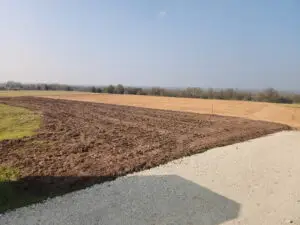
Before the crew leaves, the landowner walks the property. Questions get answered. Any areas that need a second pass get handled. You should leave your land clearing project with a clear, usable tract — ready for whatever comes next.
Pro Tip: If you’re planning to move from clearing into grading, site prep, or house pad construction immediately, tell your clearing contractor up front. The clearing pass can be optimized for what follows — stumps pulled instead of left, grade breaks planned instead of ignored.
Permit Considerations for Land Clearing in Texas
Most rural land clearing in Grimes, Walker, Madison, and Brazos County doesn’t require a clearing permit. In unincorporated areas of Texas, landowners generally have the right to clear their own land without a permit. However, there are situations where you should verify before starting work:
- Tracts near waterways or wetlands may require coordination under Section 404 of the Clean Water Act, administered by the U.S. Army Corps of Engineers.
- Certain county or municipal jurisdictions have their own regulations for larger clearing jobs.
- Tree ordinances apply in some incorporated areas — less common in rural Grimes County, but worth checking if your property is near a city limit.
When in doubt, a quick call to your county’s permit office takes 10 minutes and prevents real problems. We recommend landowners confirm permit status on their own, because requirements vary by exact location.
Timeline: How Long Does Land Clearing Take?
| Property Size | Vegetation Density | Typical Timeline |
| 1–3 acres | Light brush and cedar | 1 day |
| 3–5 acres | Mixed hardwoods and brush | 1–2 days |
| 5–10 acres | Moderate to heavy wooded | 2–4 days |
| 10+ acres | Heavy canopy with large trees | 4–7+ days |
Weather, access, and debris handling all affect these estimates. The clay-heavy soil common across Walker County and Grimes County gets waterlogged after rain — heavy equipment on saturated ground causes real damage and delays, so timing matters.
Frequently Asked Questions
What is land clearing in Texas? Land clearing in Texas is the process of removing trees, brush, stumps, and overgrowth from a property to prepare it for construction, agriculture, fencing, or development. It’s typically the first step for any raw land project before grading, site prep, or building can begin.
How much does land clearing cost per acre in Texas? Land clearing in Central Texas typically costs between $1,500 and $8,000+ per acre, depending on vegetation density, terrain, tree size, and debris disposal needs. Lightly wooded or brush-heavy land runs on the lower end; heavily forested tracts with large hardwoods run significantly higher.
Do you need a permit to clear land in Texas? Most rural land clearing in unincorporated Texas counties doesn’t require a permit, but properties near waterways or wetlands may require Army Corps of Engineers coordination under Section 404 of the Clean Water Act. Check with your county permit office before starting any clearing project.
How long does it take to clear land in Texas? A typical 3–5 acre residential tract with mixed vegetation takes one to two days with the right equipment. Larger or more densely wooded tracts can take four to seven days or more. Weather, access, and debris handling all affect the timeline.
What’s the difference between land clearing and forestry mulching? Traditional land clearing removes trees and brush mechanically — material comes off the property or goes to a burn pile. Forestry mulching grinds vegetation into mulch and leaves it on-site. Mulching works for some pasture reclamation jobs; it’s not ideal when the cleared land needs grading or construction immediately after.
Ready to Get Started? Contact 3H Construction for a Free Site Assessment.
If you own land in Central or Southeast Texas that needs clearing, you don’t need to figure out every detail before calling. Tell us what you’ve got and what you’re trying to do with it — we’ll come out, walk the property, and give you a straight answer on what it’ll take.
Call (979) 571-8110 or request a free estimate online. We’re based in Richards and serve landowners throughout Grimes County, Walker County, Brazos County, and the surrounding region.