Timber and brush clearing, pads, ponds and pipe fence for Walker County landowners — from Elkins Lake and the SH 75 corridor to the pine country along FM 1791, FM 247 and the edge of Sam Houston National Forest.
35+ Years
Combined crew experience — working since 2016
Licensed
& Insured
Free
On-site estimates
Huntsville is the Walker County seat and the doorway to the Piney Woods. Sam Houston State University and the “Big Sam” statue along I-45 are what most people see, but roughly 70 percent of the county around them is forest — loblolly and shortleaf pine mixed with red oak, post oak, sweetgum and hickory. Sam Houston National Forest and Huntsville State Park’s Lake Raven sit just south of town, Harmon Creek heads northeast toward the Trinity River, and the north end of Lake Conroe reaches into the county’s southern edge.
That means most land around Huntsville has to be cleared before anything else happens. Buyers picking up acreage off FM 1791, FM 247 or the roads toward Phelps and Riverside usually start with timber, underbrush and stumps between them and a homesite. As land clearing contractors in Huntsville, TX, we take that raw tract and turn it into a cleared, graded, buildable property with a pad, a driveway that holds up in wet weather and, if you want one, a pond and a pipe fence.
Huntsville is also the closest of our big markets: our yard in Richards is only about 21 miles away in neighboring Grimes County, and 3H has been doing this work since 2016. We bring our own equipment and run every job ourselves, so the crew that clears your land is the same one that finishes it.
3H Construction brings its full lineup of land clearing services to Huntsville and the rest of Walker County, from a wooded lot near Elkins Lake to 40 acres of pine and hardwood off FM 247. One crew, our own equipment, every step from clearing to finished fence.
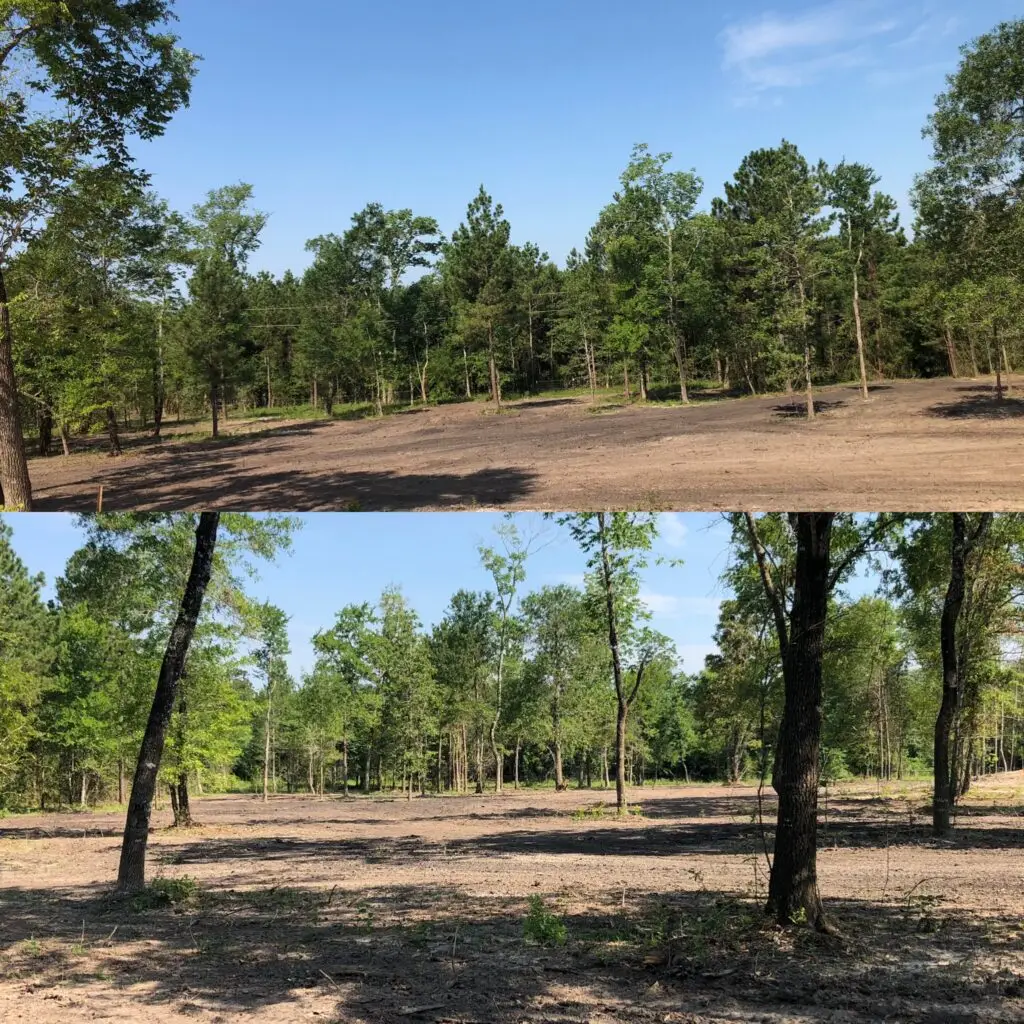
Walker County land is mostly timber — pine stands with red oak, sweetgum and hickory, plus thick underbrush once a tract has been left alone. We clear trees, stumps, brush and debris from homesites, pastures and acreage around Huntsville, using the right machine for the stand so the soil is not torn up more than it needs to be. No forestry mulching — we clear the land for whatever comes next.
Services include:

Huntsville’s rolling ground means most building sites need real cut-and-fill work, not just a quick leveling pass. As excavation contractors in Huntsville, we rough grade, cut and fill to design elevations, level sites for homes, barns and shops, and finish-grade before the slab. Inside city limits, that grading falls under the City of Huntsville’s Grading/Excavation Permit — we plan the work to match.
Services include:

On wooded Walker County tracts, site prep means more than grading: the builder also needs a clear access road through the trees, stripped topsoil and a compacted subgrade. We handle the whole sequence and coordinate with your builder so construction starts on schedule. For a lot within two miles of Huntsville, remember the county requires a City Certificate of Compliance before it will issue a development permit.
Services include:
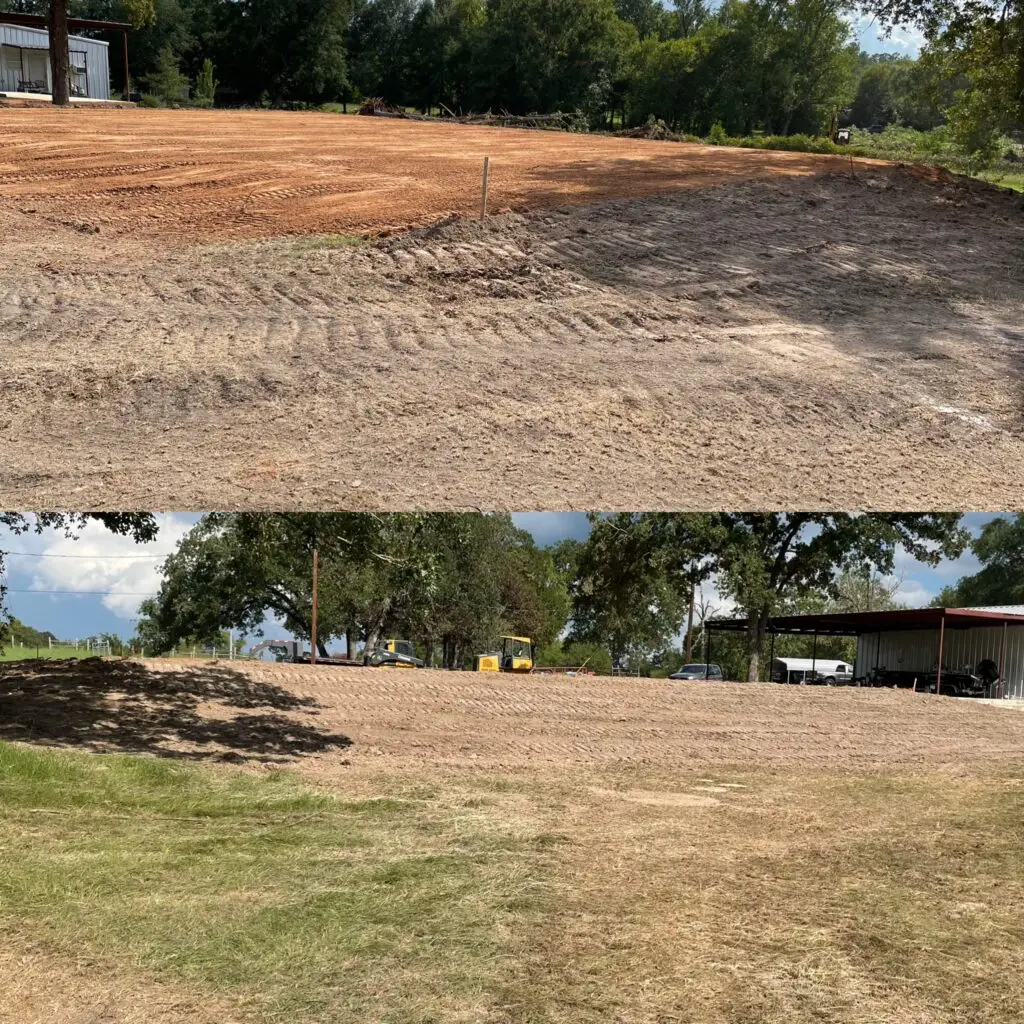
Some of the land around Huntsville sits on sandy loam that drains well; other tracts have clay subsoil that holds water through the winter and swells when it gets wet. We figure out which one you have, then cut, fill and compact the pad in lifts to your builder’s or engineer’s spec — including compaction testing if your lender requires it. Most single-family pads take one to three days once the ground is dry.
Services include:
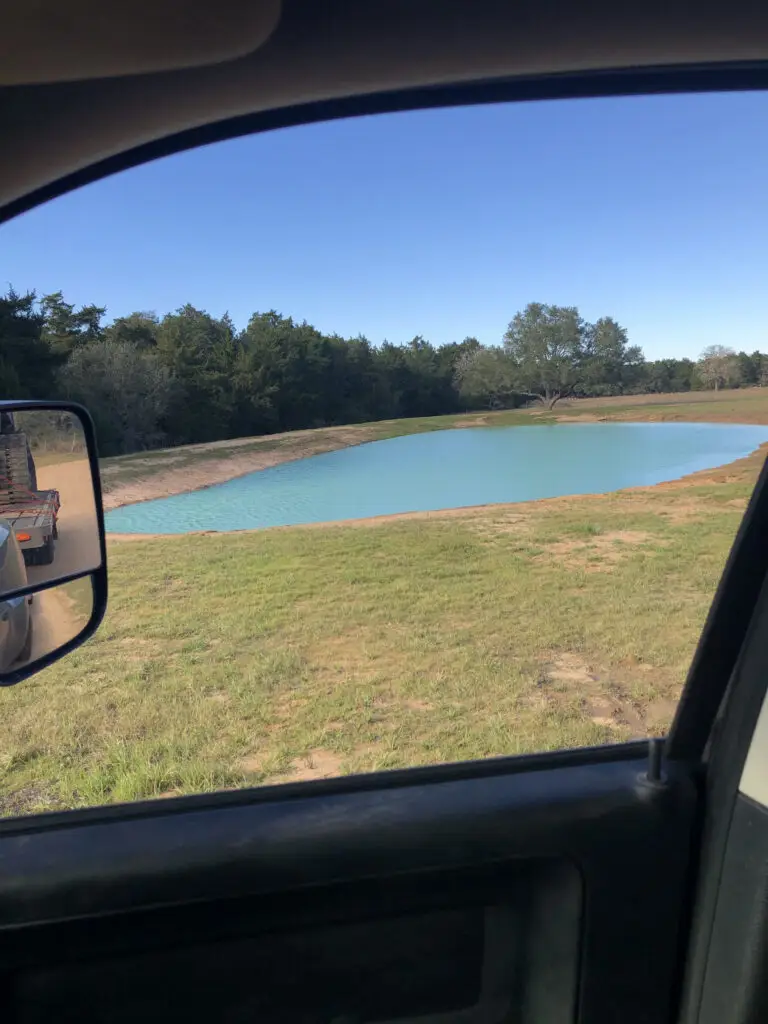
Not every tract near Huntsville will hold a pond. The sandy soils common in the Piney Woods can seep, while clay-subsoil ground often holds water well — so we check the soil and the natural drainage before we dig. When the site is right, we excavate and shape the basin, build berms from the spoil and set an overflow for the heavy rains this part of East Texas gets. Livestock tanks, fishing ponds and wildlife water.
Services include:

From an old house in town to a collapsing barn on family land out toward Phelps or Pine Prairie, we tear down residential and light commercial structures, remove slabs and foundations, and clear the site behind them. We plan utilities and debris before the first wall comes down, and we can roll straight into site prep for the new build. Inside city limits, check permit requirements with the City of Huntsville first.
Services include:
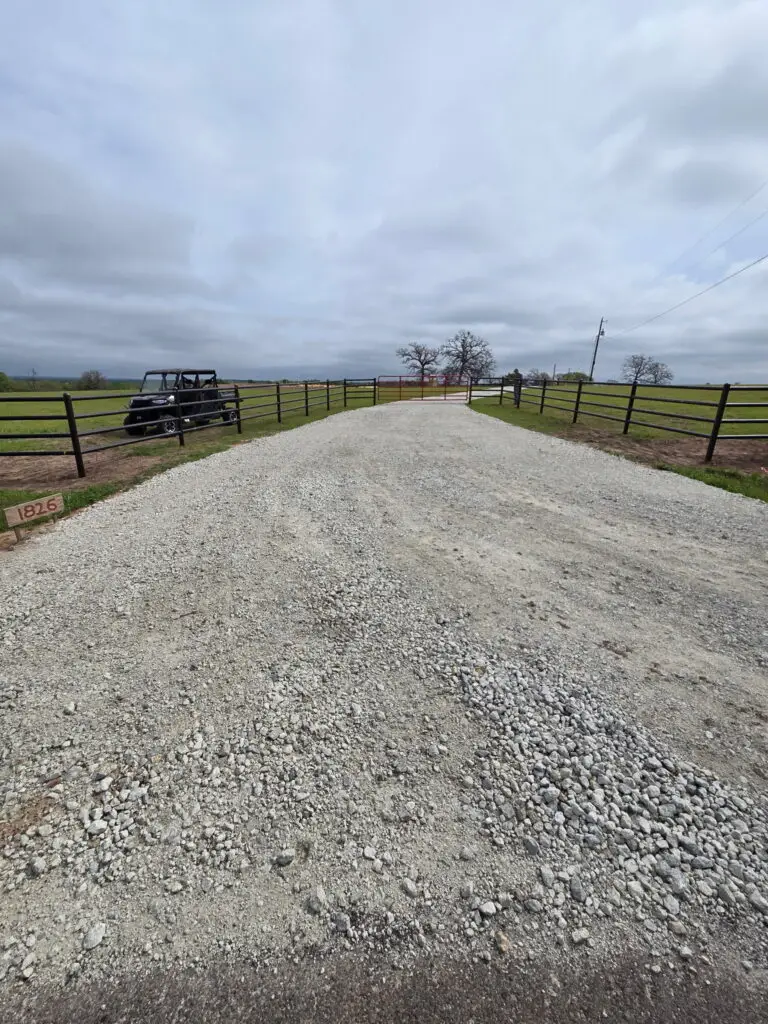
A wooded tract off a county road needs a driveway that does not turn to mud every winter and a culvert sized for the ditch it crosses. We build gravel drives on a properly prepared base and graded to shed water, and we place and bed culverts so they stay put. Inside Huntsville, residential lots on streets without curbs need a city culvert application; on a state highway, a TxDOT driveway permit applies.
Services include:

Fencing is where 3H started. Around Huntsville, that usually means pipe fence for cattle and horses on newly cleared pasture, cross-fencing and a graded gate entrance at the road. Because we also clear the fence line and install the culvert, a new Walker County property can go from timber to fenced pasture with one crew.
Services include:
Walker County ground changes fast. Depcor soil — first described near Huntsville — is loamy sand over sandy clay that builds a good pad but makes a leaky pond. Falba and Annona soils have clay underneath that holds pond water but swells when wet, and Falba keeps a perched water table in winter and spring. Add about 51 inches of rain a year and creek bottoms along Harmon Creek and the East Fork San Jacinto, and you need a crew that reads the ground before it digs.
We know how to get around Huntsville. Jobs come in off I-45 at Montgomery Road (FM 1374), 11th Street and SH 30, and SH 75; north on FM 247 toward Pine Prairie; east on SH 19 and FM 2296 toward Phelps and Riverside; and south on FM 1791 and FM 1375 toward New Waverly and the national forest. In town, that includes wooded lots around Elkins Lake and the older neighborhoods near Sam Houston Avenue.
Huntsville’s economy is steady — TDCJ, Sam Houston State and Huntsville Memorial Hospital anchor it — and Walker County added more than 7,000 residents between 2020 and 2025. Much of that growth lands on rural acreage, where buyers need timber cleared, a pad built, a long driveway put in and a pasture fenced before they can move. That is exactly the work 3H does from our base in Richards, just over the Grimes County line.
We know the local rules, too. Inside Huntsville, the Development Code calls for a Grading/Excavation Permit, a culvert application on lots without curbs, and a tree removal permit before protected trees come out. In unincorporated Walker County, the county issues development and septic permits — and land within two miles of the city needs a City Certificate of Compliance first. Near Sam Houston National Forest and the wetlands along Harmon Creek, we keep disturbance to the work zone.
Why Choose Us

Our yard in Richards is about 21 miles from Huntsville, so Walker County jobs are local work for us. Estimates and scheduling can move faster when the crew does not have to drive half a day.
Sandy uplands, clay subsoils and wet creek bottoms all show up within a few miles of Huntsville. We clear, grade and dig for the soil that is actually on your land.
Clearing, grading, pads, ponds, gravel drives, culverts and pipe fence — hand the whole property to one crew and skip coordinating three contractors.
We bring our own machines and do the work ourselves. Owner Ricky Haynie stays involved from the walkthrough to the final pass, and if a job is harder than it looks, you hear it at the estimate.
We walk your Walker County property before we quote. Call or text (979) 571-8110, Monday through Saturday, 7 AM to 6 PM.
As land clearing contractors in Huntsville, TX, we cover the city and all of Walker County, from the Trinity River side to the national forest. From our base in Richards, we also serve these nearby communities.
There is no single per-acre price around Huntsville, because the timber varies so much. A tract of mature pine and hardwood with big root systems costs more to clear than brushy pasture, and slope, wet ground and what you want done with the debris all change the number. We walk the property first and give you a free, accurate estimate instead of a guess.
Cost depends on size, depth and how much shaping, berm or overflow work is needed. Whether it will hold water matters even more: the sandy soils common in the Piney Woods around Huntsville tend to seep, while clay-subsoil ground often holds a pond well. We check the soil and drainage at the estimate and tell you plainly if your spot will work, or where on the property a better one is.
Inside city limits, Huntsville’s Development Code calls for a Grading/Excavation Permit, and a tree removal permit is required before protected trees are removed. In unincorporated Walker County, the county issues development and septic permits — and for property within two miles of Huntsville, the county asks for a City Certificate of Compliance first. Requirements depend on the property, so check with the city or county before work begins; we will flag anything we see at the estimate.
Yes — on private property. A lot of Walker County acreage borders or sits near Sam Houston National Forest, south of Huntsville toward New Waverly and the state park off Park Road 40. We clear only within your property lines, keep disturbance to the work zone and leave buffers along creeks and wet bottoms. The national forest itself is federal land, so any work on or across it needs Forest Service approval.
It depends on how much dirt has to move, how deep the cuts are, whether fill has to be hauled in, and the soil. Rolling Walker County sites usually need more cut-and-fill than flat ground, and wet clay can slow the work. A straightforward house pad might take a day or two; a larger grading job can run a week or more. We give you a firm scope and timeline after seeing the land.
Length is the biggest factor, followed by how much clearing the route needs, base depth and whether a culvert is required at the road. Most residential drives need four to six inches of compacted base, more where the soil stays wet through winter. Inside Huntsville, lots on non-curbed streets need a city culvert application, and driveways onto state highways need a TxDOT permit.
Huntsville averages about 51 inches of rain a year, with June the wettest month and steady rain from November through January keeping clay subsoils soaked. Pads and ponds go best in drier stretches, because wet clay cannot be compacted properly. Clearing can often run longer into wet weather, and Walker County issues burn bans in dry spells that affect how brush piles are handled. We work year-round and schedule around conditions.
Whether your land is off FM 1791 near the national forest, up FM 247 past Pine Prairie or out toward Riverside, 3H Construction is only about 21 miles away and ready to walk it with you. Tell us what you want to build, and we will give you a free, straight estimate for the clearing, grading, pad, pond, driveway or fence it takes.