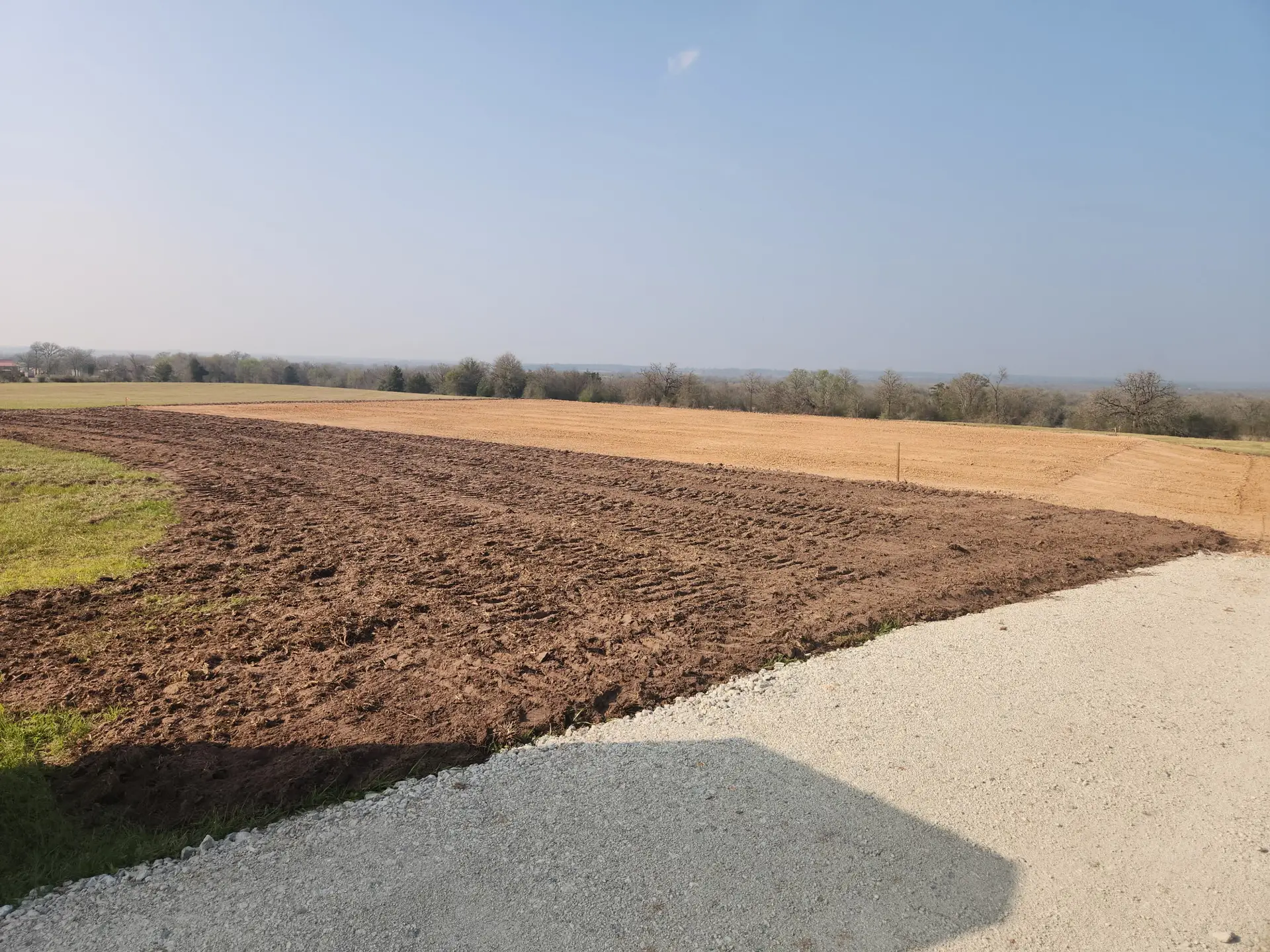
Most people think land clearing is the whole job. It isn’t. Clearing and grading land is a two-step process, and the order matters: clear first, then grade to set the right elevation and drainage, then compact the ground before anything gets built on it. Skip a step or do them out of order, and you’re paying for it later.
As a land clearing company working across Grimes, Walker, and Brazos counties, we’ve seen exactly what happens when that order gets skipped. This guide walks through the sequence we follow on every job, why each step matters, and what to watch for on Central Texas terrain.
The Order: Clear, Grade, Compact
There’s a reason contractors don’t grade before clearing or skip straight from clearing to building. Each step depends on the one before it.
- Clear the trees, brush, and root systems so the equipment has clean ground to work with.
- Grade the land to set the elevation and drainage slope.
- Compact the soil so it can support a foundation, driveway, or pad without shifting.
Do them out of order and you’ll fight the land the whole way through your project.
Did You Know? A property that looks flat to the eye can still have several feet of elevation change across an acre. Grading is what corrects that before drainage becomes a problem.
Step 1: Clearing the Land the Right Way
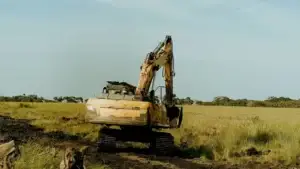
Clearing removes what’s standing in the way — trees, brush, cedar, root balls, and any debris left behind. On a lot of Central Texas acreage, that means cedar and hardwood growth that’s been left unmanaged for years.
What Gets Removed First
The standard approach is to clear the heaviest growth first and work down to smaller brush, since it’s more efficient to move big obstacles before fine-tuning the smaller stuff. Root systems generally need to come out, not just get cut at ground level, since leftover roots cause problems once grading equipment starts moving dirt.
Watching the Terrain as We Go
Clay-heavy soil, low-lying pockets, and areas that hold water all change how we approach a site. Wet or low-lying ground can limit which equipment we can safely bring in, and some areas need to dry out before clearing can happen without tearing up the property. This is one reason we walk every site before giving an estimate instead of pricing land clearing services sight unseen.
Pro Tip: If your property has a section that stays soggy after rain, point it out before the crew arrives. It changes both the clearing plan and the grading plan that follows.
Step 2: Grading to Set the Elevation and Drainage
Once the land is clear, grading shapes the ground. This is where rough elevations get set and water gets told where to go instead of where it wants to go on its own.
Rough Grading vs. Finish Grading
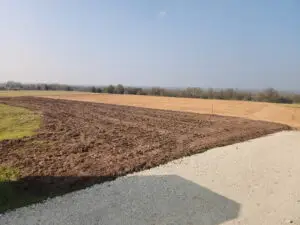
Rough grading establishes the general shape and slope of the property. Finish grading comes later, closer to construction, and creates the precise elevations a foundation or pad needs. Most clearing-to-construction jobs only need rough grading at this stage — finish grading happens right before the build.
Reading Your Property’s Natural Drainage
Texas clay doesn’t drain water quickly once it’s saturated, which means drainage has to be planned into the grade, not fixed afterward. Our excavation and grading services always account for where water naturally wants to move across a property before we cut a single slope.
Step 3: Compaction — The Step Landowners Forget
Compaction is the step most first-time landowners don’t know to ask about, and it’s the one that causes the most expensive problems when it’s skipped.
Why Compacted Ground Matters
Loose, ungraded fill settles unevenly over time. A foundation poured on soil that hasn’t been properly compacted can crack, shift, or sink in spots as the ground beneath it continues to settle. The same goes for driveways and pads.
Texas Clay and Compaction
Clay soil expands when wet and contracts when dry, which makes compaction timing matter. Working clay when it’s too wet packs it poorly and traps moisture underneath. We factor moisture conditions into when we compact, not just how.
Did You Know? Poor compaction causes foundations to settle unevenly on their own, and it’s made worse in Central Texas by expansive clay soil that swells and shrinks with moisture. That’s two separate problems working against your foundation if the ground underneath isn’t handled right.
If your project includes a house pad, compaction becomes even more important — our house pad construction work is built entirely around getting that base right the first time.
What We See When a Step Gets Skipped
We get calls from landowners who cleared their own land, or hired a crew to clear only, and then tried to build without proper grading and compaction in between. The pattern is consistent: standing water in spots that used to drain fine, a driveway that ruts after the first hard rain, or a pad that doesn’t sit level once the frame goes up.
Pro Tip: If you’ve already cleared your land yourself, have a contractor walk the property before you grade. It’s easier to fix a grading plan on paper than to fix a foundation after it’s poured.
The fix is almost always the same: bring in a crew to regrade and properly compact before construction moves forward. It costs more than doing it right the first time, and it always costs more than the landowner expected.
How Long Clearing and Grading Takes
Timelines depend on acreage, vegetation density, and terrain, so treat any general range as a starting point, not a quote. Here’s roughly how project size tends to affect the workload:
| Project Size | Typical Clearing Load | Typical Grading Load |
| Under 2 acres, light brush | Light | Light |
| 2–5 acres, moderate growth | Moderate | Light to moderate |
| 5+ acres, heavy timber | Heavy | Moderate to heavy |
Weather, soil moisture, and property access all shift these timelines in either direction, which is why we walk the property and give you a specific window instead of a generic one. A full site preparation project that includes clearing, grading, and compaction takes longer than clearing alone, but it’s the difference between a site that’s actually ready and one that just looks ready.
Before grading starts, it’s worth checking your property’s soil type through the USDA’s free soil survey tool, which shows drainage characteristics and soil composition by parcel. For larger projects, the EPA’s construction stormwater guidance outlines erosion and drainage practices worth knowing before dirt starts moving.
Get Your Land Cleared and Graded the Right Way
Clearing and grading land only works when it’s done in order — clear, then grade, then compact. Skip a step and you’re not saving time, you’re just moving the cost further down the road.
Ready to get started? Contact 3H Construction for a free estimate. We’ll walk your property, tell you what it needs, and get the sequence right from the first day of work.
FAQs
Do I need to grade my land after clearing it? Yes, in almost every case. Clearing removes vegetation, but it doesn’t set the elevation or drainage a construction project needs. Grading is what makes the ground usable for building, driveways, or pads.
How long does it take to clear and grade land in Texas? It depends on acreage, vegetation density, and terrain, so there’s no single number that fits every property. A contractor should walk your site and give you a specific timeframe rather than a generic one.
Can I skip grading if I’m just building a small shed? Even small structures benefit from proper grading and a compacted base. Skipping it often leads to a structure that settles unevenly within the first year or two.
Does clay soil affect grading and compaction in Texas? Yes. Clay soil expands and contracts with moisture, which affects how and when it can be compacted correctly. Working it at the wrong moisture level leads to poor compaction and future settling.